Ask four different sites what a home costs in the Old North End right now and you will get four different answers, and none of them will be lying.
One tracker's active listings in March 2026 showed an average list price of $698,737 across just eight homes, working out to $293 a square foot. A separate national site, pulling from the same general pool of Old North End inventory that same month, put the median list price at $599,900 and average sale price near $754,991, with homes sitting 66 days before going under contract. A Colorado Springs brokerage's own listing feed showed a median of $982,000 across 30 active homes. And a national closed-sales tracker's most recent 30-day window told a completely different story: 10 sales, a median closed price of $430,000, and a median of just 7 days on market.
Four sources, four price points spanning $430,000 to $982,000, all describing the same historic district in the same year. That's not measurement error. That's a neighborhood that has stopped being one market and started being three, stitched together under a single name.
For context, the broader Colorado Springs market was far more legible. In July 2026, the median home price across El Paso and Teller counties sat at $497,475, with homes averaging 48 days on market and roughly 3.8 months of supply, a market economists would call soft but stable. The Old North End's numbers, whichever one you pick, sit above that baseline. The question a comparison-stage buyer actually needs answered isn't whether Old North End costs more than the rest of Colorado Springs. It's which Old North End you're pricing.
Three Markets Wearing One Name
The spread exists because three genuinely different kinds of property get counted together every time someone runs a "median" for this neighborhood.
At the top sits what old-timers still call Millionaire's Row, the 1200 and 1300 blocks of Wood Avenue and the mansions that line Cascade Avenue. The 1912 Sharp Mansion, built for Arthur G. Sharp, a founder of Exchange National Bank, later served as headquarters for the American Red Cross and the organization now known as United Way before returning to the market as a private residence. A few blocks over sits the 1922 Spanish Colonial Revival designed by architect Thomas MacLaren for civil engineer E.C. Van Diest. These are not comparable to anything else in the dataset. When one of them transacts, it can single-handedly drag a small-sample average upward by tens of thousands of dollars.
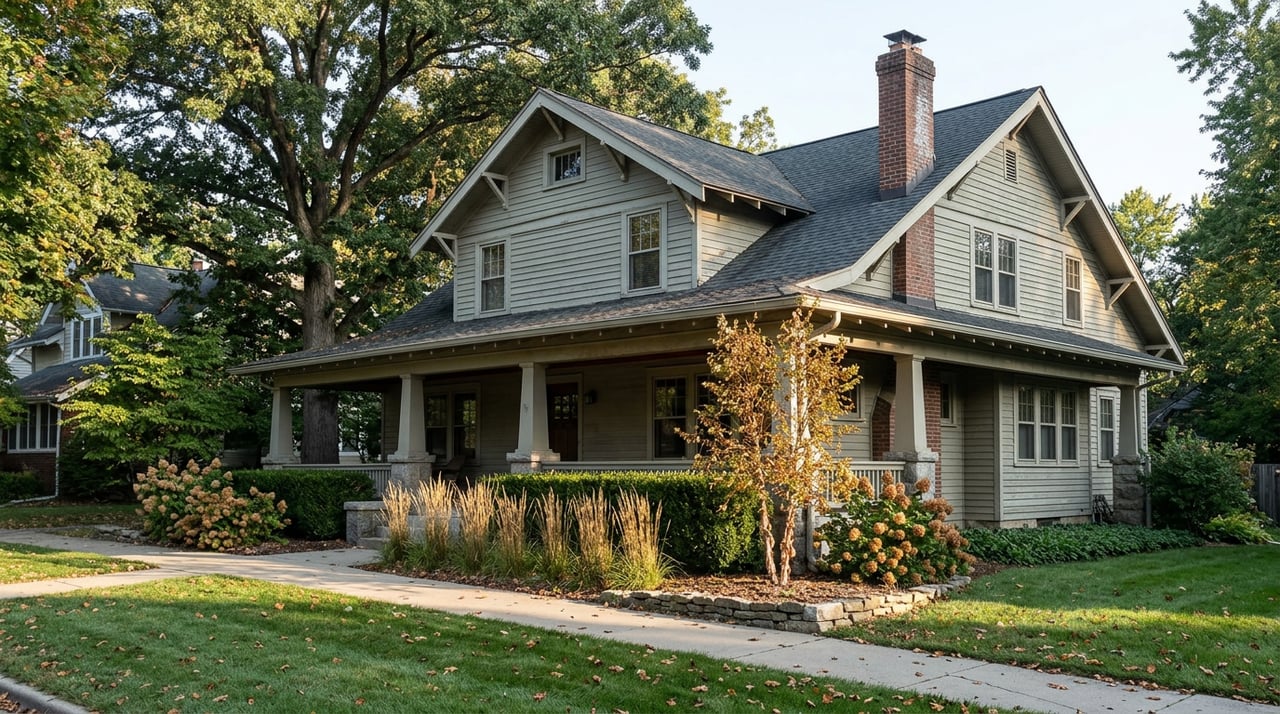
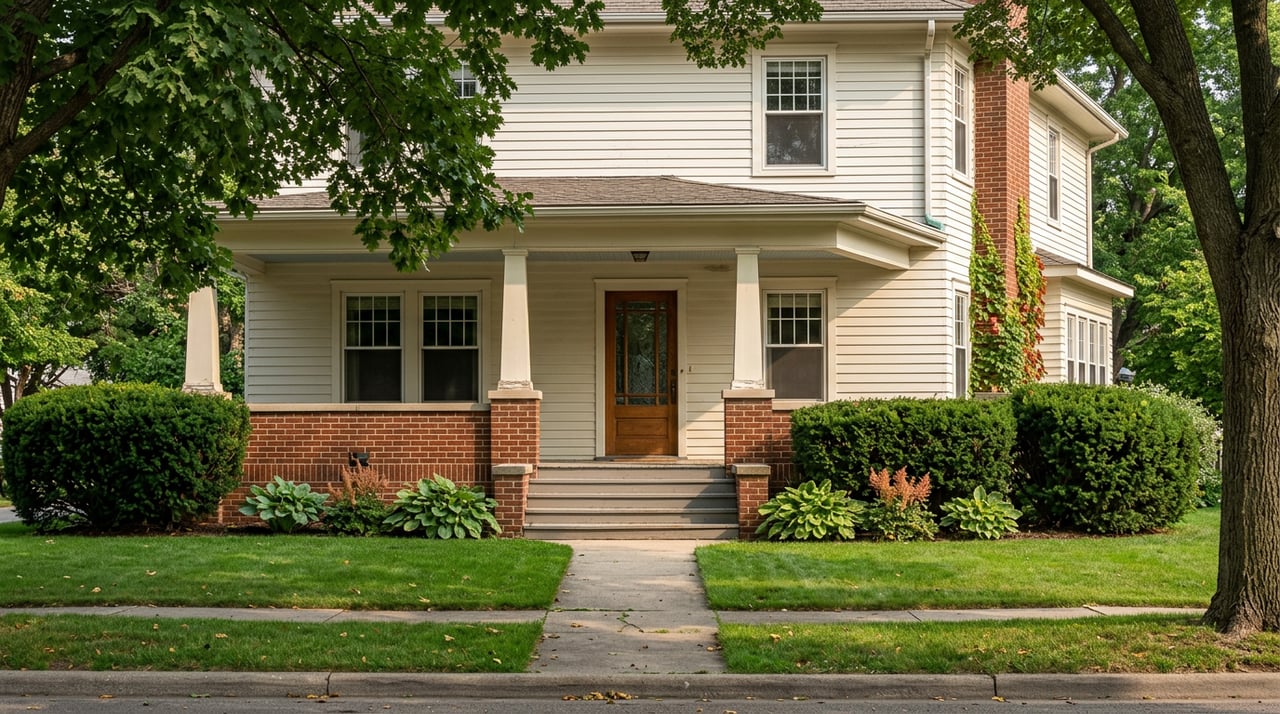
In the middle sit the Craftsman bungalows and mid-size Victorians that make up most of what actually shows for sale on any given week, which is why one recent active-listing snapshot showed a range running from $469,000 all the way to $1,250,000 among just eight homes. With that few listings on the market at once, a single high-end relist or a single fixer-upper can swing an average far more than it would in a neighborhood with 200 active listings.
At the bottom of the price curve sit the R-2 zoned properties, a zoning designation that allows two-family use on a single lot and has quietly reshaped parts of the neighborhood over the decades. One well-documented example at 1331 N. Wahsatch Avenue added a two-story, three-bedroom accessory dwelling behind the main house in 2015, complete with its own kitchen and laundry, turning a single-family lot into a small income property. Multiply that pattern across the neighborhood's stock of triplexes and small apartment conversions, some carved out of Victorian-era buildings, and you get sales that report as a fraction of what a comparable single-family home would fetch, because they're not single-family sales at all.
Stack a mansion, a mid-size bungalow with unknown mechanical updates, and a triplex unit into the same monthly sample of eight or ten closed sales, and the median becomes less a description of the market and more a description of which of the three categories happened to trade that particular month.
The Historic Overlay Isn't What Most Buyers Assume
Buyers comparing neighborhoods often treat "historic district" as shorthand for a blanket renovation freeze, and that assumption costs them real information during a comparison. The actual trigger is narrower. Exterior improvements visible from the public right-of-way that require a Regional Building Department permit are the ones that call for review by the city's Historic Preservation Board, measured against the North End Historic District Design Standards that City Council adopted. Interior work, and exterior work that doesn't need a permit, generally falls outside that process entirely.
It's also worth knowing who isn't in charge of that review. The Old North End Neighborhood association, the group behind the interpretive guide many owners consult before starting a project, has no approval authority over renovation requests. That guide itself is explicitly voluntary and carries no force of law, distinct from the Design Standards that the Board actually reviews against. A buyer comparing a bungalow here against a similar house in a non-historic pocket of Colorado Springs should be pricing in a permit review for street-facing exterior changes, not a veto on everything from a kitchen remodel to a new water heater.
Every property sits within a specific zone district too, and the city's own SpringsView mapping tool is the place to confirm whether a given lot carries R-2 designation before assuming a listing's income potential, or lack of it.
The Tax Credit That Changes the Renovation Math
The other piece buyers routinely leave out of their comparison is the state incentive built specifically for houses like these. Colorado's state historic rehabilitation tax credit returns 20 percent of qualified rehabilitation expenditures on a residential property, and under the 2024 legislative update, that credit is now capped at $100,000 per property within a rolling window, up from the previous $50,000 ceiling, for credits awarded on or after January 1, 2025. The credit resets when the property changes hands, so a buyer taking on a fixer-upper isn't necessarily inheriting a used-up allowance. Projects need at least $5,000 in qualified expenses to be eligible, a low bar for anyone touching plumbing, electrical, or a roof on a century-old house.
That 20 percent offset matters most for the mid-tier Craftsman and Victorian stock, the category with the widest variance in prior renovation quality. A buyer weighing a $600,000 lightly updated bungalow against a $750,000 fully restored one down the street should be running that tax credit into the comparison, not treating the gap as pure sunk cost.
How to Actually Compare a Home Here
None of this means the Old North End's premium over the rest of Colorado Springs is fake. It means the size of that premium depends entirely on which of the three sub-markets a specific listing belongs to, and no single neighborhood-wide median will tell you that. The more useful comparison starts with architecture era and scale, zoning designation confirmed through the city's own tools, and documented renovation history rather than an assumed one. A buyer who understands that the same neighborhood contains Millionaire's Row mansions, ordinary Craftsman houses, and R-2 income properties is comparing like to like instead of averaging apples into a fruit salad and calling it a median.
Common Questions
Does every renovation in the Old North End require city approval? No. Board review applies specifically to exterior work visible from the public right-of-way that requires a Regional Building Department permit. Interior renovations and non-permitted exterior work typically fall outside that review process.
Is the state rehabilitation tax credit only for commercial buildings? No. Homeowners can claim 20 percent of qualified rehabilitation expenditures on a residential property, capped at $100,000 per property under the current rules, with a $5,000 minimum project spend to qualify.
Why do some Old North End listings look far cheaper than the neighborhood's reputation suggests? Some of that inventory consists of R-2 zoned duplexes, triplexes, or small apartment conversions rather than single-family homes, which report at a different price point than a comparable detached house.
Comparing neighborhoods on median price alone will always undersell a place this layered. If you're weighing the Old North End against another Colorado Springs neighborhood and want the comparison run against actual comparable sales rather than a blended average, Trish Ingels has spent more than three decades reading exactly this kind of local nuance. Request a private consultation to talk through which of the Old North End's markets fits what you're actually trying to buy.